How to Reduce OTA Commissions at an Independent Hotel
The way to reduce OTA commissions is to move more of your bookings to channels that charge no commission: your own website booking page, your phone line, and repeat guests. You keep Booking.com and Expedia for finding new guests, but you stop paying them to rebook people who already know your hotel.
That is a gradual shift, not a switch you flip. Below is the plan, in the order most small hotels should do it.
How much are OTA commissions really costing you?
Start with your own number. Most owners know roughly what they pay, but few know it per channel and per month.
Here is a simple illustration, not a typical rate. If a guest books a $120 room through an OTA with a 15 percent commission, you pay $18 for that one night. Multiply that by every OTA night in a month, and the figure becomes a real line on your profit and loss statement, often larger than your software, your laundry or your marketing.
To find your real figure:
- Pull a month of reservations and split them by source: each OTA, your website, phone, walk-in.
- Add up the room revenue for each source.
- Multiply each OTA's revenue by its commission rate from your contract.
- Note which OTA guests are repeat guests. Those are the ones you paid for twice.
If you use the channel manager in Lodging Suite, the Channel Production report does this for you. It shows bookings and revenue by channel along with the commission, so you can see what each channel costs rather than guessing.
Should you stop using Booking.com and Expedia?
For most independent hotels, no. OTAs put your property in front of travelers who would never have found you. The goal is to stop paying commission on guests you could have won yourself.
Think of OTAs as advertising that you pay for only when it works. The question is not whether to use them, but how much of your business depends on them. A hotel that sells out Saturdays through OTAs but fills midweek only because of OTAs has a different problem than one that is 70 percent OTA because its website cannot take a booking.
Step 1: Make your own website able to take bookings
This is the biggest lever. If a guest finds your website, and the only option is a phone number or a contact form, many will click over to an OTA to finish the booking. You then pay commission on a guest who was already on your site.
A booking engine on your own site fixes that. Guests search dates, see live rates and room photos, and pay or reserve right there.
With Lodging Suite there are two ways to do it:
- WordPress site: install the Lodging Suite Booking plugin, paste in your API key and property ID, and place the search, results and room pages with shortcodes.
- Any other site (Wix, Squarespace, GoDaddy, hand-built): turn on the hosted booking page under Settings, Website booking. You get your own page with your hotel name, address and phone at the top. Link your Book Now button to it, or paste the embed code to put booking inside your own pages.
Both honor every rate, season, closure and restriction you set in the system, so there is nothing to keep in sync. The commission-free booking engine charges no per-booking fee. Card payments still carry the normal processing fees from your payment provider, which are far smaller than a typical OTA commission.
Step 2: Give guests a reason to book direct
A booking page alone is not enough if the OTA looks cheaper or easier. Give direct guests something concrete:
- A small incentive: a coupon code, a length-of-stay discount, or a package such as breakfast or parking included. In the rates tools you can set coupon codes, packages and length-of-stay discounts without touching your OTA prices.
- A perk the OTA does not offer: free early check-in or a late checkout for direct bookers.
- Flexibility: a clear cancellation policy and the option to pay on arrival, if that suits your hotel.
Check your OTA agreements before you advertise a lower direct price. Some contracts have rate parity or similar clauses about how you can price publicly. Perks and member-style offers often work better than a visibly lower price, but read your own terms rather than assuming.
Step 3: Answer the phone and close the booking
A lot of direct bookings start with a call. A missed call is a guest who tries the next hotel, or the OTA. That is especially true at night and on weekends when nobody is at the desk.
The Virtual Front Desk is an AI that answers your existing hotel number by phone and text, answers questions from your knowledge base, books the room, and texts a secure pay link. The AI never takes card numbers by phone, and Lodging Suite never stores card numbers; Stripe handles them. Reservations it makes show an AI Phone or AI Text badge, so you can see how many came in this way. For more on the late-night side of this, see how to stop missing calls at night at a small hotel.
Step 4: Turn OTA guests into repeat direct guests
The guest who found you on Booking.com last spring does not need to go back through Booking.com next year. But they will, unless you give them an easy way to rebook.
A few low-effort habits:
- Put your website and phone number on the receipt, the room card and the checkout message.
- Use scheduled guest emails after checkout to thank them and invite them to book direct next time, with a coupon code if you like.
- Keep guest profiles with stay history, a VIP flag and notes, so a returning guest feels recognized.
- Offer add-ons directly to guests with upcoming stays, such as early check-in, late checkout or parking. Lodging Suite's add-on sales can suggest the right offer to the right guest and write the text or email. Guests who see that you are easy to deal with are more likely to come straight to you the next time.
Please check any OTA terms about contacting guests who booked through them. Rules about how you use their contact details and messaging vary, so read your agreements.
Step 5: Control what the OTAs sell, and when
Even with OTAs in the mix, you have more control than many owners use.
- Close OTAs on nights you will sell out anyway. If Saturday in peak season fills from your own site and phone, you do not need to hand a commission to an OTA for that room. Use closures or restrictions per date.
- Set per-channel markups. If a channel costs you commission, a markup for that channel can offset some of it. Lodging Suite's Channel Manager supports a markup per channel.
- Open OTAs wider on slow nights. That is where their reach pays for itself.
- Watch your pace. If a weekend is filling directly, raise prices. If it is behind, use OTAs to help. Smart Pricing, an optional add-on, suggests rate changes from your own booking history, and each suggestion shows its reason.
Whatever you do, keep your rates and availability in sync everywhere, or you risk selling the same room twice. We cover that in how to avoid double bookings between Booking.com and Expedia.
A simple 90-day plan
| When | What to do |
|---|---|
| Week 1 | Split last month's bookings by source and work out commission per channel. |
| Weeks 2 to 3 | Put a working booking page on your website and link every Book Now button to it. |
| Month 2 | Add a direct-booking perk or coupon code, and put your website on every receipt and post-stay email. |
| Month 3 | Compare your source mix to week 1, close OTA inventory on nights you reliably sell direct, and adjust. |
Do not expect the mix to change in a week. The point is to watch the direct share climb, a little each month, and to keep the savings.
What Lodging Suite does and does not do here
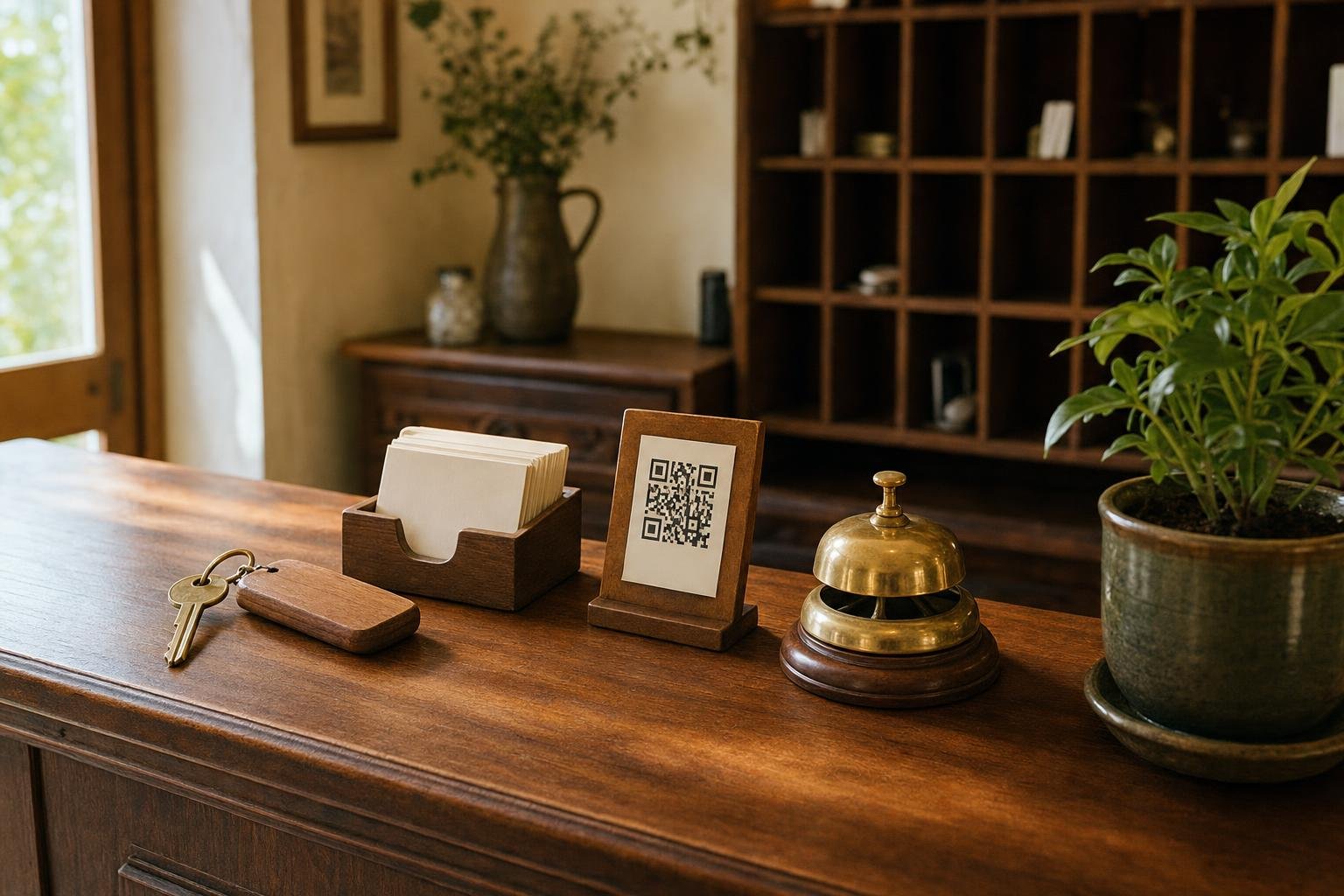
Lodging Suite gives you the tools for the direct side: the commission-free booking engine and WordPress plugin, a hosted booking page with a QR code for signs and flyers, rates, coupons and packages, add-on offers, the AI phone line, and the Channel Production report with commission if you add the Channel Manager.
It is not a marketing agency. It does not run ads or get you ranked on Google for you, so you still need your website to be findable and your listings to be accurate. Think of it as making sure that when a guest does find you, booking direct is the easy path.
Pricing is per room per month with no setup fee and no contract: $5.99 per room for 1 to 49 rooms, $5.49 for 50 to 99, and $4.99 for 100 or more. Add the Channel Manager for $29 per property per month, or the Virtual Front Desk for $29 per month including 100 minutes, then $0.20 per minute. For a 30-room property, the base system is $179.70 per month.
Start with your own numbers
Try it yourself. Start the 30-day free trial at lodgingsuite.com/signup, with no credit card. Set up your booking page, try a coupon code, and see how it looks on your own site before you decide anything.
If you want to hear how the AI phone line handles a booking call, call the demo hotel at 518-318-4000.
Frequently asked questions
How can independent hotels reduce OTA commissions?
Put a booking engine on your own website, give direct guests a reason to book with you (a coupon, package or perk), answer every call, and invite past guests to rebook direct. Keep OTAs for reaching new guests and close them on nights you would sell out anyway.
Is it worth staying on Booking.com and Expedia?
For most independent hotels, yes. They bring in travelers who would not find you otherwise. The aim is to stop paying commission on guests who already know you, not to leave the OTAs entirely.
How do I find out how much commission I pay each channel?
Split a month of reservations by source, total the room revenue for each OTA, and apply the commission rate from each contract. With the Lodging Suite Channel Manager, the Channel Production report shows bookings and commission by channel.
Does a direct booking page cost commission?
Lodging Suite's booking engine charges no per-booking commission. Card payments still carry normal processing fees from your payment provider, and the system itself is priced per room per month.